Sunday, 5 August 2018

Measuring Our Responsibilities In This World By Using Gods Word As Our Ultimate Standard

The following article Measuring Our Responsibilities In This World By Using Gods Word As Our Ultimate Standard Find more on: http://www.totalsurvival.net/

The only real way of measuring our responsibilities is to go straight to the bible.

Measuring Our Responsibilities According To Jesus

Jesus speaks to the principle of measuring our responsibilities and its connection to stewardship several times in His parables. In Luke 12, for example, He describes a good steward, one who, in his master’s absence, faithfully administers his estate. Jesus promises that such a steward will receive a rich reward: “Truly, I say unto you, that he will make ruler over all that he has” (v. 44). This makes “measuring our responsibilities” one of our Lord’s regular themes. The reward for faithfulness is the opportunity for greater faithfulness. The reward for responsibility is a greater responsibility. This is true in earthly matters and in the kingdom of heaven. OK so far, right?

But then Jesus suggests an alternate scenario: What if the steward isn’t faithful? What if he abuses his authority? And what if he beats his subordinates and wastes his master’s larder and wine cellar? What if he’s drunk on the job? Then, Jesus said, his master will return without warning and pass immediate and frightening judgment. He “will cut him in sunder, and will appoint him his portion with the unbelievers” (v. 46). Some have argued that “cut in sunder” (in two) is likely figurative, but even if that’s so, it doesn’t change the application: the portion of unbelievers is certainly hell. Jesus is saying that those who pervert their stewardship show themselves to be His enemies and worthy of His wrath.

Measuring Our Responsibilities And Our Accountability

But there’s more. Jesus now discusses the question of accountability: Does ignorance of the master’s will constitute excuse? Or at least grounds for some sort of mitigation of the penalty? Here is Jesus’ answer: The servant who knew his master’s will and violated it “shall be beaten with many stripes,” but the servant failed to learn his master’s will but still violated it “shall be beaten with few stripes” (vv. 47-47-48). “For unto whomsoever much is given, of him shall much be required” (v. 48).

What Jesus is saying is that both in his parable and on Judgment Day, there are degrees of accountability and, therefore, degrees of punishment. “Many stripes” versus “few stripes.” Should this be any great comfort to those who rebel against God and His law? Nope, hell is still hell. Dante was not only nuts but dead wrong. Hell has no fringe or limbo zones for folks who didn’t love God but didn’t really hate Him either. No neutrality here. And no such people among the children of Adam according to the bible. Here’s the thing: We are all conceived and born in sin (Ps. 51:5; 58:3; Rom. 3:10, 23). We all know God and hate God until God brings us to Himself through Jesus Christ. Yet our Lord still underscores the principle that greater knowledge and accountability may lead to greater punishment.

Measuring Our Responsibilities: The Case Of Caiaphas and Pilot

What Jesus teaches in Luke 12 is consistent with the rest of Scripture. Some sins are worse than others. The whole Mosaic law testifies to this in its sacrificial system and its penology. The sins of the priest required a young bull as a purification offering; those of a ruler required a young male goat; those of the commoner required a female goat or lamb (Lev. 4). A murder was a capital crime; theft required restitution. It allowed the judges to punctate particularly vile or vicious crimes with lashes, the number determined “according to his fault” (Deut. 25:2). The basic rule of Mosaic penology was “life for life, an eye for an eye, a tooth for a tooth, hand for hand” (Ex. 21:23-24). Extreme? Nope. Just means that the punishment should always fit the crime. You shouldn’t go to prison for life … for jaywalking.

In the New Testament Jesus told Pilate that the high priest’s sin in handing Jesus over to Rome was greater than Pilate’s sin in trying and condemning Him (John 19:11). Given that not all sin is punished in this world, we should assume some sins will receive greater punishment than others in eternity. Jesus told the Pharisees that those who “devour widows’ houses” but cover their sins with the pretense of long prayers will receive “greater damnation”—greater because they commit the greater sins of sacrilege and extortion (Matt. 23:14). (Some TV preachers probably should read that part of the bible once in a while.)

Measuring Our Responsibilities

Then there are the passages that compare the final fate of notoriously evil cities to that of the Jewish cities that rejected Jesus during His earthly ministry. Jesus said of Capernaum, “It shall be more tolerable for the land of Sodom in the day of judgment, than for thee” (Matt. 11:24). He said the same of any city that rejected the testimony of His seventy missionaries (Luke 10:12). Of Chorazin and Bethsaida, He said: “It shall be more tolerable for Tyre and Sidon at the judgment, than for you” (Luke 10:13-14). Tyre and Sidon were Phoenician cities and generally loyal to Baal.

In part, we are dealing with the relative nature of individual sins; in part, with the principle that greater knowledge, the reception of fuller or clearer revelation, brings with it greater responsibility. Jesus told His disciples, “If I had not come and spoke unto them, they had not had sin: but now they have no cloak for their sin” (John 15:22). The writer of Hebrews twice argues along the same lines: If the revelation mediated by angels at Sinai required a “just recompense of reward” for those who violated its terms, “how shall we escape” if we neglect the promise of the gospel revealed by God’s own Son? (Heb. 2:1-4).

And again, he who despised Moses’ law died without mercy at the word of two or three witnesses: “Of how much sorer punishment, suppose ye, shall he thought worthy” who willfully rejects and despises Christ as He is offered in the gospel? (Heb. 10:28-31). Yep. Those who despised Moses’ law died in their rebellion. But, those who despise Jesus face an even greater punishment. Makes you wonder why some people say the New Testament is “kind and gentle” compared to the Old Testament. Now, what does all of this have to do with history?

Measuring Our Responsibilities In The Course Of History

History is God’s creation, His story or drama. God is sovereign in all His acts, immanent in all that He does. Also, God reveals His glory, wisdom, justice, mercy, and truth in every incident and episode of Earth’s history. God plays the shorthand and the long game. God purposes the collapse of empires and the fall of a lone sparrow (Dan. 2; 7; Matt. 10:29). He lays waste to great cities before the watching world (Nah. 1), but in some remote corner of our planet, He sends showers and causes green grass to spring up and grow, though no man will ever see it (Job 38:26-27).

All of these things God works by His own wise providence. This means they all matter to Him. They matter eternally. But they don’t all have the same level of significance. God says to His people: “Fear not therefore: ye are of more value than many sparrows” (Matt. 10:31). Elsewhere Jesus lays down a broader principle: “How much then is a man better than a sheep?” (Matt. 12:12).

The things men do matter greatly to God. He considers the heart; He weighs the effect. This is true when He judges His people; it is also true when He judges His enemies. His judgment in history and beyond history testifies to His great regard for history.

Measuring Our Responsibilities In This World

In time and eternity, God measures out the consequences of men’s evil acts precisely because history is important to Him. If it were otherwise, then how we behave in this world would be irrelevant. And while we’ve discussed hell as having no gradients earlier… on earth we make distinctions in the way that God prescribes. If we don’t use Gods word to understand and discern the temporal gradients given to us… the serial killer and the petty thief would be on an equal footing. So would the child molester and the weekend drunk. Hatred and murder would be moral equivalents. But this isn’t Christianity. Maybe more like Hinduism or Gnosticism.

Rather, Christianity though scripture tells us there is a real difference. And that there is, in history, a difference between a Thomas Jefferson and a Joseph Stalin, between an Albert Schweitzer and an Adolf Hitler, or between an Attila the Hun, who destroyed men’s bodies, and an arch-heretic like Arius, who destroyed men’s souls. That means it’s important to learn how to judge your fellow man’s character with a lot of discernment and respect. We’re all sinners after all. So we must look at God’s distinctions and not our own. The bible says unbelievers are hellbound for example. But it doesn’t say you can treat the unbeliever in any way you think is right. Meaning that you can’t “run-over” your unbelieving neighbor literally or figuratively. For example, that might mean telling an unbeliever the truth about hell. But it also might mean commending him for his compassion or practical charity. But the point I’m making is that we can honestly tell those who don’t know Christ as Lord, that restraint in their sins is better than no restraint at all.

Measuring Our Responsibilities On The Last Day

measuring our responsibilities

God’s measuring our responsibilities … now and into eternity.

I guess there are lots we can tell our unbelieving friends. We can assure them that God in some measure considers (judges less severely) their chastity, courage, and honesty even when such things spring from a faithless heart. But on the last day, none of the practical and pragmatic stuff … none of the outward virtues and nothing born merely of common grace … will lead one step toward heaven.

Nope. No amount of outward or external good can save a human soul, but such external virtues can have a real impact on Christ’s Church and on the future of His kingdom. Every single one of our actions matters now and into eternity.

The post Measuring Our Responsibilities In This World By Using Gods Word As Our Ultimate Standard appeared first on Off The Grid News.

This Article Was Originally Posted On offthegridnews.com Read the Original Article here

Learn More Here: Measuring Our Responsibilities In This World By Using Gods Word As Our Ultimate Standard

Saturday, 4 August 2018

Michigan Water Emergency Declared After Cancer-Toxin Found in Drinking Water

Michigan Water Emergency Declared After Cancer-Toxin Found in Drinking Water was originally seen on http://totalsurvival.net/

The Michigan water emergency was declared after state officials detected high levels of PFAS.

Michigan Water Emergency

Residents of another Michigan community have found themselves without safe drinking water. Frighteningly, another Michigan water emergency was announced after a carcinogenic (cancer-causing) toxin was detected.
Traces of the carcinogen PFAS 20 times over the safe levels were detected in Parchment’s water supply, Michigan Live reported. Parchment is a suburb of Kalamazoo. Some unincorporated neighborhoods in Cooper Township were also affected.
Perfluorooctanesulfonic acid (PFAS) is an ingredient in fabric softeners. Disturbingly, PFAS is so dangerous it was banned in the European Union in 2006. Confusingly, PFAS is also known as PFOA. High levels of two other toxins; polyfluoroalkyl and PFOS, were also detected.
Revealingly, studies have linked high levels of PFAS to cancer. Testicular, thyroid, kidney, prostate, bladder, and ovarian cancer might be caused by PFAS.

Carcinogen Found in Drinking Water

The Michigan water emergency was declared after state officials detected high levels of PFAS.
The safe level of PFAS recommended by the EPA is 70 parts per trillion. Officials reportedly detected a PFAS level of 1,587 parts per trillion in Parchment’s municipal water supply.
Therefore, residents were told to stop drinking tap water after the tests last week. Not surprisingly, officials began distributing bottled water at Parchment High School.
“State and local officials and members of the community have been working in full partnership to ensure people in the area have safe water in the short, medium and long-term,” Lieutenant Governor Brian Calley (R) assured citizens.

The Town without Water

In an effort to rid the water of toxins, officials are flushing out the Parchment water system. Once the system has been flushed out, it will be connected to the Kalamazoo County water supply.
Disturbingly, news reports did not say how long it would take to connect the systems. An immediate connection would expose all the users of Kalamazoo water to high levels of PFAS. Therefore, the Parchment system has to be flushed before connectivity is established.
The Michigan Water emergency and distributions of bottled water will continue until the systems are connected. To alleviate thirst, officials have distributed 7,000 cases of bottled water to Parchment residents.

Source of Carcinogen Unknown

Disturbingly, the source of the PFAS in Parchment’s water supply is unknown. The town gets its water from three wells that have been shut down.
Not even people with private wells are safe from PFAS. Michigan Live reported that private wells within one mile of Parchment’s well are being tested for carcinogens.
Parchment is known as “The Paper City” because of a paper mill that operated there in the early 20th Century. News stories did not say if that factory was the source of the contamination.

Poisoned City

The Parchment PFAS is the latest Michigan water crisis to make headlines. In 2016 the entire water supply in Flint, a city of 97,386 people, was declared unsafe for human consumption.
Frighteningly, state officials knew Flint’s water was dangerous but allowed citizens to drink it for two years, author Anna Clark alleged. Clark’s allegations are found in a new book called The Poisoned City: Flint’s Water and the American Urban Tragedy.
Worst of all, Clark alleges that water systems all over the United States are bad as that in Flint. The latest Michigan water emergency indicates that Clark’s allegations are well-founded.
Therefore all Americans need to provide an Off-Grid source of safe drinking water for their households. Going Off-Grid might be the only way to ensure your family has enough water to drink.

The post Michigan Water Emergency Declared After Cancer-Toxin Found in Drinking Water appeared first on Off The Grid News.

This Article Was Originally Posted On offthegridnews.com Read the Original Article here

Read More Here: Michigan Water Emergency Declared After Cancer-Toxin Found in Drinking Water

Flood Survival Tips | How To Survive Before, During, And After A Flood

Top 10 Lies About Wilderness Survival

The post Top 10 Lies About Wilderness Survival was originally seen on http://totalsurvival.net/

This post may contain affiliate links. If you make a purchase, I'll earn a small fee at no extra cost to you.*

Top 10 Lies About Wilderness Survival Follow Me on Pinterest

Top 10 Lies About Wilderness Survival Follow Me on Pinterest

If you like hiking or camping or hunting, you probably think you’d be pretty good at wilderness survival. But that isn’t necessarily true. Those activities are temporary and usually involve lots of gear and food. Being lost in the wilderness for days with few or no supplies is a completely different experience.

The idea that outdoorsy people are automatically good at surviving in the wilderness is just one of ten common lies pointed out in this video by EverydayTacticalVids.

There’s a common theme running through most of these lies: As long as you have the right gear, you’ll be able to survive in the woods. In reality, you also need to have plenty of knowledge, skills, experience, and determination. Keeping yourself alive while separated from civilization is far more difficult than it looks on TV.

Here’s his list of lies:

10. If you like hiking or camping or hunting, you’ll be good at wilderness survival.
9. If you have a knife, you’re ready to survive in the wilderness.
8. If you have a survival kit, you’re ready to survive in the wilderness.
7. If you can find a pond or stream or river, you’ll be able to catch fish.
6. If you have a fishing kit, you can count on having fish for dinner.
5. If you have a FireSteel, you’ll be able to build a fire.
4. The biggest threat to your life is large predators like cougars and bears.
3. If you’re in trouble, you’ll just do whatever you have to do.
2. You can make it two or three days without water.
1. If you have the right gear or knowledge or skills, you’ll survive.

Watch the video below to hear him explain why these are lies and what the truth is.

Sponsored LinksThis article first appeared on urbansurvivalsite.com See it here
Original Post Here: Top 10 Lies About Wilderness Survival

Friday, 3 August 2018

Living On Solar: Is Ditching The Grid Realistic?

The post Living On Solar: Is Ditching The Grid Realistic? Find more on: http://totalsurvival.net

Living on solar can take another necessity that your family depends on out of the hands of the power company.

If you’ve ever thought about ditching the grid and living on solar power, then you’re not alone.

Questioning Your Local Power Company

Odds are that you’re living in a home right now that is tied into a nationwide network of power lines, water mains, and phone cables. Many of us depend on these things to provide services that supposedly are necessary to make our lives easier.

While services like electricity, running water, natural gas, and cable television are staples of the developed world, most Americans have unfortunately been sold a lie. The prevailing notion is that we must obtain these services from large utility companies.

Take your local power company, for example. What exactly is wrong with questioning why you’re having to pay exorbitant amounts of money each month for services that they’ve told you that you can’t live without?

Developing Your Independence From The Shaky Power Grid

And let’s even grant that you’ve adjusted to the consistent fluctuation in energy prices on a month-to-month basis. What about your dependence on the grid to provide you and your family with the power that you need to go about your daily lives? Is it really responsible to rest your family’s well-being in the hands of a company that could turn the lights off? After all, couldn’t they do this either knowingly or unwittingly at a moment’s notice? Moreover, we haven’t even discussed the power grid’s old age and lack of dependability. Furthermore, we haven’t even brought up the fact that past reports to Congress acknowledged that the nation could suffer a nationwide blackout if just nine of the 55,000 substations failed or were sabotaged.

Harness The Power Of The Sun When The Electricity Goes Out…

There are plenty of social stigmas in the U.S. today that cast a negative light on the way that some people live. Nevertheless, few things boast responsibility and independence more than a home that produces solar energy. It’s a place that is self-reliant and free from the shackles of local utility companies.

There also has never been a better time to fire your power company and go solar than right now. Living on solar may very well be the best homestead decision for you and your family that you’ll ever make.

How Practical Is Living On Solar?

living on solar

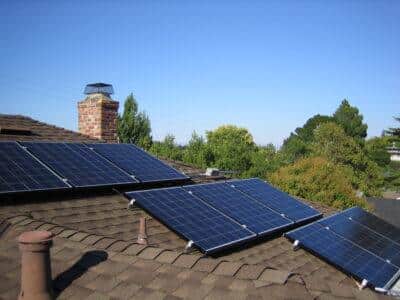
Installing a practical solar energy system onto your own home can benefit both yourself and the environment.

Most people today know at least a little bit about solar panels. In fact, if you’ve never seen them installed on a house, odds are you’ve at least noticed some smaller black solar panels on a calculator or on your neighbor’s sidewalk lights. Most people consider solar technology nothing more than a neat invention with minimal, large-scale applications.

In reality, today’s solar power technology makes up a $100 billion industry with no signs of going away in the near future. Some of the largest companies in the world use solar panels at their various facilities across the country. Such businesses include Google, Walmart, Apple, and General Motors. They can utilize these power systems to generate millions of dollars worth of electricity each year.

So, the utilization of solar energy by large corporations seems to benefit both the companies as well as the environment. Nonetheless, how practical would it be to install a similar system on a smaller scale onto your residential home?

World’s Smallest Solar Generator … Priced So Low Anyone Can Afford It!

The Three Key Advantages Of A Solar Powered Home

Having a professional install a solar power system in your home can be practical in a variety of ways. Consider the following:

  1. Your system may be smaller than you think. Most people assume that converting a home to solar energy means cutting down trees. After all, you need to fill up the entire front yard with sun-thirsty solar panels, right? Not true. Solar systems can be rather modest installations, depending on your energy consumption.
  2. You may have some help going solar. That’s because most states have several tax incentives that help reduce some of the costs associated with converting your home into a solar-powered residence. If you would like to learn more about some of the tax incentives for going solar in your particular state, then check out the Database of State Incentives for Renewables and Efficiency.
  3. You don’t have to fully commit right away. One of the best parts about living on solar today is the fact that you don’t have to ditch the grid completely yet. This is especially true if you’re already hard-wired into the grid. Many utilities can rig your home with a special meter. It’s a device that measures the amount of energy coming in and going out. This means that if you produce more than you use, then the power company will be paying you for the electricity that you are feeding back into the grid. However, if you do have a grid-tied unit, be aware of the following possibility. When there’s a blackout, you won’t have power despite having solar panels (that’s a requirement of utility companies). To get around this, you’d need a stand-alone solar generator that is not tied to the grid.

Conclusion

So is ditching the grid for a solar-powered system a realistic proposition? The answer is absolutely, and for lots of reasons.

Going solar will also take another necessity that your family depends on out of the hands of the power company. Consequently, you will find it directly in your own control.

Ditching the grid and living on solar isn’t just a realistic choice – it’s also a responsible one.

You may also enjoy reading an additional Off The Grid News article: Power Grid Even More Vulnerable Today Than Under Obama?

What are other reasons to “ditch the grid”? Leave your reply in the comments below.

Get $600 Worth Of Survival Blueprints … Absolutely Free!

The post Living On Solar: Is Ditching The Grid Realistic? appeared first on Off The Grid News.

This Article Was Originally Posted On offthegridnews.com Read the Original Article here

Originally Published Here: Living On Solar: Is Ditching The Grid Realistic?

145 Self-Sufficiency Skills Every Prepper Should Learn

How To Dye Fabric, Deter Bugs And Even Make Tea With Food Scraps

How To Dye Fabric, Deter Bugs And Even Make Tea With Food Scraps was first published on http://totalsurvival.net

You can do so much more with food scraps than just throw them away or use them for compost.

People tend to throw away loads of food scraps in the kitchen, failing to recognize that much of the “garbage” can be easily repurposed.

Keep reading and I’ll show you a few tips and tricks for making your life easier if you’re an off-gridder or homesteader, or simply someone who likes to re-use items.

The most obvious thing one can do with food scraps is to place them in a compost pile, but we can do so much more with them than that.

Uses For Food Scraps #1: Egg Shells

Let’s start with my personal favorite food scrap: egg shells.

  • Fertilizer for your plants. In case you did not know, all plant life requires minerals. Furthermore, egg shells contain lots of minerals, and if you grind them and mix the respective powder with the earth, your plants will love you.
  • Deterrent for various pests. This category includes cats or deer messing around in your garden. All you have to do is scatter some crushed eggshells in the areas affected by these pesky “neighbors” and they’ll avoid bothering you in the future.
  • Make DIY food supplements for you and your family. Calcium is a very important mineral for human health and we all need plenty of it, especially children. To increase your daily calcium intake, all you have to do is grind the eggshells into an extra-fine powder. Next, add a teaspoon of the respective stuff to your smoothie or other drink once per day.
  • Improve your chickens’ diet. Some people feed their livestock oyster shells for that, but since you can give your chickens their own egg shells back, why bother?
  • Make a candle. All you have to do is crack the top off really carefully and then fill the empty shell with paraffin or beeswax. After this, you put a wick into the mix and, voila, you just made yourself an eggshell candle!
  • Make seed starter pots. Once again, just crack the top off carefully and put soil and a seed inside the empty egg shell. You’ll end up with your own fully organic seed pot which is already rich in minerals, especially calcium. It’s everything a plant needs to grow strong and healthy! In addition, you can place it directly in the ground.

Uses For Food Scraps #2: Apple Peels

Next on the menu is apple peels, as they also come with lots of good uses for your homestead.

  • Make jelly. Apple peels contain tons of vitamins and minerals, along with pectin, which works wonders in making a tasty and healthy jelly.

Beet Powder: The Ancient Secret To Renewed Energy And Stamina

  • Clean your kitchen pots and pans. Apple peels are very acidic, and acids are great for removing stains and discoloration from your kitchen hardware, especially the aluminum stuff. All you have to do is fill the respective vessel with water, add some apple peels into the mix, and bring it to a boiling temperature. Then, turn the heat off and let it sit there for 60 minutes. Drain and rinse properly.
  • Make apple vinegar. Put the apple peels inside a receptacle (like a jar) and cover them with pure water. Place a weight on top of the peels so they stay submerged under water at all times. Cover the respective receptacle and store it somewhere warm for at least 30 days.

  • Filter pollutants in the water. How do they work? Well, it’s pretty basic: Just put apple peels inside a jug of water and they will absorb (by attracting and capturing) ions and various pollutants. Keep in mind that this method is not fail-safe. Apple peels will not purify the water completely and they’re not fool-proof against various biohazards. However, they will definitely remove at least some dangerous pollutants.

Uses For Food Scraps #3: Onion Peels

I know that they may smell bad, but don’t toss onion peels. Just use them! How?

  • Dye your hair, fabric, or Easter eggs with them. For tips on fabric or Easter eggs, watch the videos below.

  • Remove pollutants from water. Just like apple peels, onion peels can help clean water.
  • Make an organic pesticide. Simply cook onion peels along with garlic peels.
  • Soothe stings. Simply press or hold them on the affected portion of the skin.

Uses For Food Scraps #4: Corn Husks

Last but not least, corn husks are excellent for your homestead. For example:

  • Make a water filter. Grind them into a fine dust and mix the dust with clay and coffee grounds. Basically, you must build a corn-husk bowl by adding water to the respective mix and transforming it into something resembling clay. Use that clay for building a bowl, and then let it sit in the sun to dry thoroughly, and that’s about it. The corn-husk bowl will act as a water filter if you fill it with water, put it on top of another vessel, and allow the water to soak through the corn husk bowl into the vessel. Moreover, all the contaminants will be left behind. You can rinse and re-use, ad nauseam.
  • Weave and braid the corn husks into a DIY basket. Watch the video below.

  • Cook with them. For instance, you can wrap delicate foods like fish in a wet corn husk during cooking, thereby preventing them from falling apart/burning.
  • Make corn silk tea. Follow the instructions in the video below.

  • Start a fire. Dried corn husks are highly flammable and great at helping get a fire going.

You may also enjoy reading an additional Off The Grid News article: Getting Rid Of Ants – 11 All-Natural Ways To Get Rid Of Ants In Your Kitchen

Are there other uses for food scraps that you would have included? Share your suggestions in the comments below.

Discover The Secret To Saving Thousands At The Grocery Store. Read More Here.

The post How To Dye Fabric, Deter Bugs And Even Make Tea With Food Scraps appeared first on Off The Grid News.

This Article Was Originally Posted On offthegridnews.com Read the Original Article here

Article Source Here: How To Dye Fabric, Deter Bugs And Even Make Tea With Food Scraps